
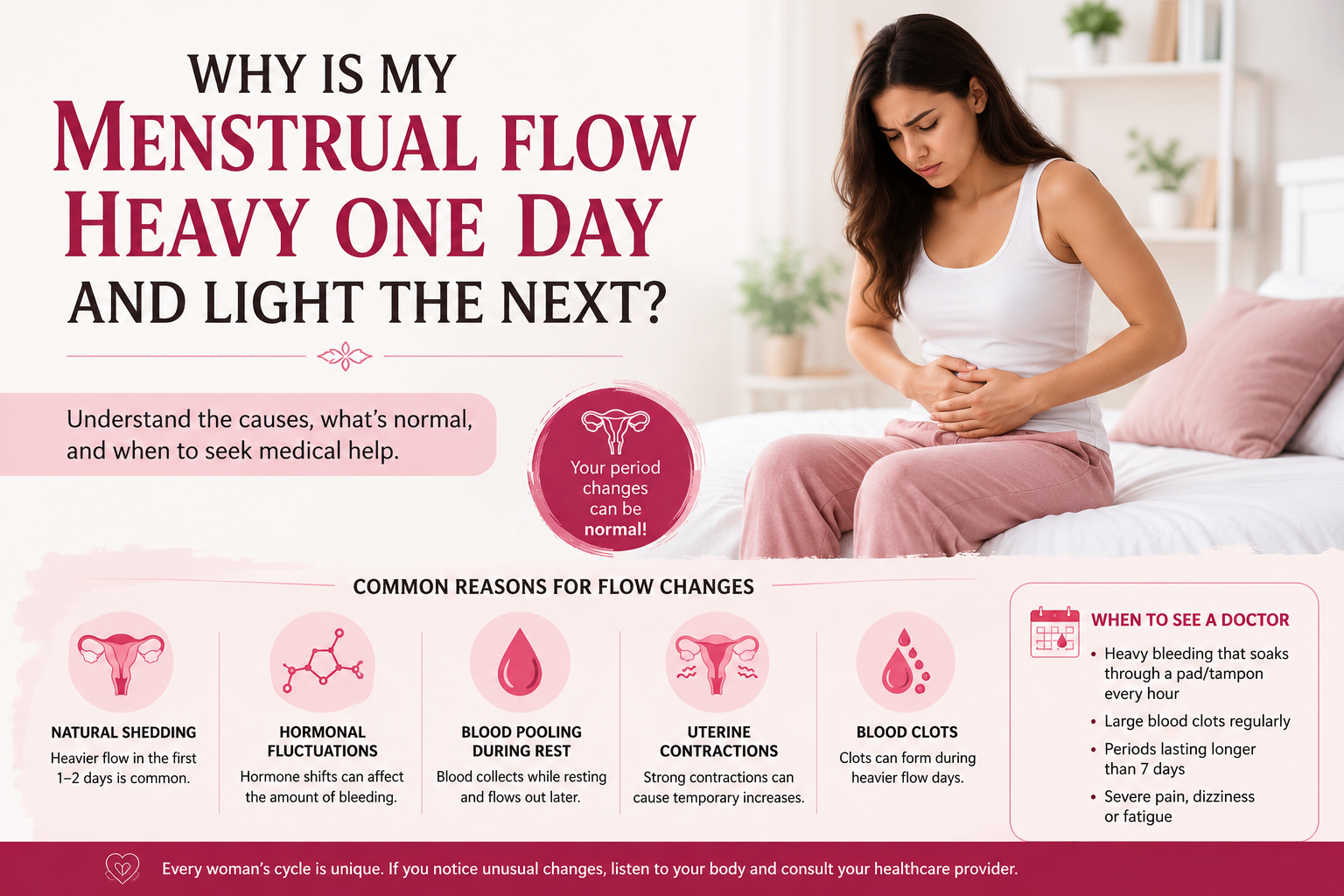
It's common to notice changes in your menstrual flow throughout your period. One day, you may experience heavy bleeding, while the next day it seems much lighter. Although this can feel concerning, fluctuations in menstrual flow are often a normal part of the menstrual cycle.
However, in some cases, changing flow patterns may indicate an underlying health condition that deserves medical attention. Understanding what's normal—and when to seek help—can help you take better care of your reproductive health.
Also Read - Why Is My Period Not Coming On Time And What To Do
Is It Normal for Menstrual Flow to Change?
Yes. For many women, menstrual bleeding is not consistent from start to finish. It's perfectly normal for your period to:
- Be heavy during the first one or two days
- Become lighter toward the end
- Stop briefly and restart later
- Vary from one cycle to another
The average menstrual period lasts 2 to 7 days, with the heaviest bleeding typically occurring during the first 48 hours.
Also Read - Why Does My Period Blood Have Clots And Is It Normal
Why Does Your Menstrual Flow Change?
Several natural and medical factors can influence the amount of bleeding you experience each day.
1. Natural Shedding of the Uterine Lining
During your period, your uterus sheds its lining (endometrium). Most of this tissue is expelled during the first few days, which is why bleeding is usually heavier at the beginning.
As less tissue remains, your flow naturally becomes lighter.
2. Hormonal Fluctuations
Your menstrual cycle is regulated by hormones, including:
- Estrogen
- Progesterone
- Follicle-stimulating hormone (FSH)
- Luteinizing hormone (LH)
Even slight hormonal changes can affect how much and how quickly the uterine lining sheds.
Hormonal fluctuations may be caused by:
- Stress
- Weight changes
- Excessive exercise
- Poor sleep
- Certain medications
3. Blood Pooling During Rest
Many women notice heavier bleeding in the morning after waking up.
This happens because menstrual blood collects in the uterus and vagina while you're lying down. Once you stand up, gravity allows it to flow out, making your period seem suddenly heavier.
4. Uterine Contractions
Your uterus contracts to help expel blood and tissue.
Sometimes these contractions occur more intensely, causing a temporary increase in menstrual flow before slowing again.
5. Blood Clots
Small blood clots during a heavier flow are often normal.
Clots form when bleeding is faster than your body's natural clot-dissolving process.
However, consistently passing large clots (larger than a quarter) may warrant medical evaluation.
Also Read - Why Does My Period Start And Stop Suddenly
Medical Conditions That Can Cause Variable Menstrual Flow
If your menstrual flow changes dramatically every cycle or becomes unusually heavy, an underlying condition may be contributing.
Uterine Fibroids
Fibroids are noncancerous growths in the uterus that may cause:
- Heavy periods
- Large clots
- Longer-lasting periods
- Pelvic pressure
Endometriosis
Endometriosis occurs when tissue similar to the uterine lining grows outside the uterus.
Symptoms may include:
- Heavy bleeding
- Severe menstrual cramps
- Pain during intercourse
- Pelvic pain between periods
Polycystic Ovary Syndrome (PCOS)
Women with PCOS often experience:
- Irregular periods
- Heavy bleeding after missed periods
- Hormonal imbalance
- Acne
- Excess facial hair
Adenomyosis
In adenomyosis, the uterine lining grows into the muscle wall of the uterus.
Common symptoms include:
- Heavy menstrual bleeding
- Painful periods
- Pelvic pressure
Thyroid Disorders
Both hypothyroidism and hyperthyroidism can disrupt hormone balance and affect menstrual flow.
Signs may include:
- Fatigue
- Weight changes
- Hair thinning
- Temperature sensitivity
Lifestyle Factors That Affect Menstrual Flow
Your daily habits play an important role in menstrual health.
Common influences include:
- High stress levels
- Rapid weight gain or loss
- Intense physical activity
- Poor nutrition
- Lack of sleep
- Smoking
- Certain medications, including blood thinners
Improving overall wellness often helps support a healthier menstrual cycle.
When Should You See a Doctor?
Occasional changes in menstrual flow are usually not a cause for concern.
However, schedule an appointment if you experience:
- Bleeding that soaks through a pad or tampon every hour for two or more hours
- Periods lasting longer than seven days
- Large blood clots regularly
- Severe pelvic pain
- Bleeding between periods
- Bleeding after menopause
- Dizziness or symptoms of anemia
- Sudden changes in your menstrual pattern
Early evaluation can help identify underlying conditions and ensure you receive appropriate care.
How Doctors Diagnose Heavy or Irregular Menstrual Flow
Your healthcare provider may recommend:
- A review of your medical history
- Physical and pelvic examination
- Blood tests to check hormone levels and anemia
- Thyroid function testing
- Pelvic ultrasound
- Pap smear (when appropriate)
- Endometrial biopsy in certain situations
Diagnosis depends on your age, symptoms, and overall health.
Tips for Supporting a Healthy Menstrual Cycle
While not all menstrual changes can be prevented, these healthy habits may help:
- Eat a balanced, nutrient-rich diet.
- Stay physically active with moderate exercise.
- Maintain a healthy weight.
- Prioritize quality sleep.
- Practice stress-management techniques such as meditation or yoga.
- Stay hydrated throughout your cycle.
- Track your menstrual cycle using an app or calendar.
Monitoring your cycle can help you recognize changes early and provide valuable information for your healthcare provider.




Comments (0)